
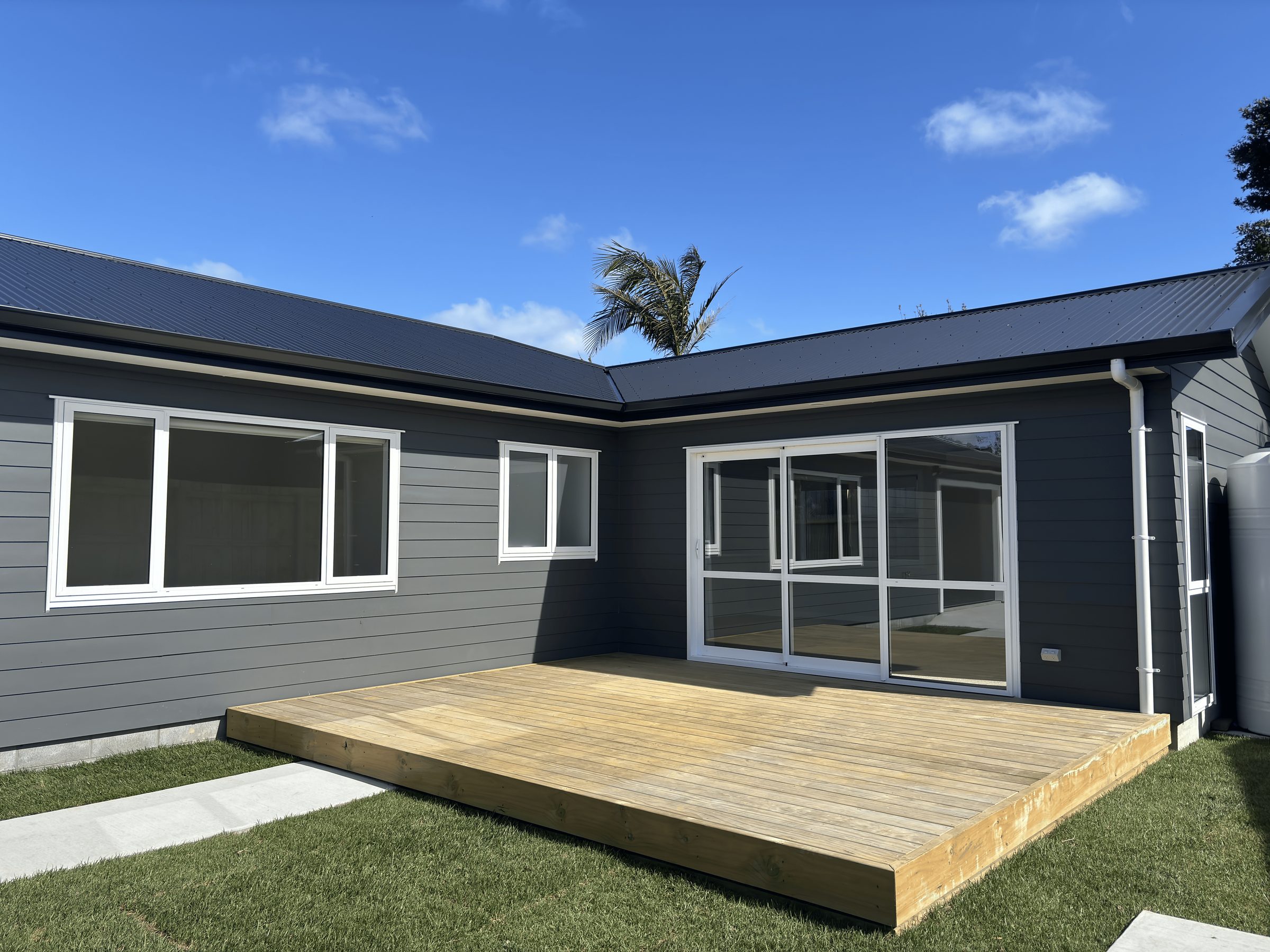
Pukekohe is home turf for me and the Rag Reno’s team. I know the streets, the mix of houses, and the practical reasons local families decide to build rather than move. Some owners have a villa or bungalow with good bones but a layout that no longer works. Others have a newer family home that needs more bedrooms, better connection to the garden, or a more useful kitchen and living area. Some have bought a section and want a new home built around the way they live.
I’m John, the owner of Rag Reno’s. I work with homeowners across Pukekohe on renovations, extensions, villa upgrades, relocations, and new builds. My job is to make the path from first idea to finished home clear. That starts with understanding the property properly, not quoting from a quick conversation and hoping the unknowns sort themselves out later.
A Pukekohe project can be a small reconfiguration, a substantial addition, or a full transformation of an existing house. The right answer depends on the house, the site, the budget, and your plans for the next five or ten years. I will give you straight advice about what is practical, what needs investigating, and what needs to be decided before work starts.
Why renovate or build in Pukekohe?
Pukekohe is Franklin’s main centre, with the everyday services, schools, shops, sports facilities, and community connections that make it a popular place to settle. It also sits in a growth corridor between Auckland and the Waikato. That gives local homeowners a useful choice: improve a property in an established part of town, or build something new as the area continues to grow.
The town’s housing stock is mixed. You will find older timber villas and bungalows, post-war houses, brick-and-tile family homes, and newer builds. Each type needs a different approach. An older home may have original floors, tired wiring, previous alterations, or a roof and cladding system that needs close checking. A newer house may need an extension or internal rework rather than a complete rebuild.
Pukekohe owners often come to me for one of four reasons:
- The house has enough land and a good location, but the kitchen, bathroom, or living areas are dated.
- The family needs another bedroom, a home office, a second living space, or a better indoor-outdoor connection.
- The existing rooms are the wrong shape, with poor flow and wasted floor area.
- The owners like the section and neighbourhood and would rather invest in the property than sell and start again.
Renovating can also be a sensible way to retain features that give a house its character. A timber villa or bungalow does not need to become a generic modern box. Good work can improve insulation, services, storage, and everyday comfort while keeping the details that make the original house worth caring for.
A new build offers a different route. You can plan the floor plan, energy performance, storage, access, and outdoor areas together instead of fitting new requirements into an old shell. I help clients compare those options before they commit to a design. Sometimes a focused extension is the better use of the property. Sometimes a larger renovation or new home gives a better long-term result.
What I build and renovate in Pukekohe
I take on work that needs careful planning as well as sound building. That includes:
- Full home renovations
- Kitchen and living-area reconfigurations
- Home extensions and additions
- Villa and bungalow renovations
- Bathroom, laundry, and service upgrades
- Garage conversions and practical extra rooms
- Relocated homes and additions around an existing house
- New homes on Pukekohe sections and lifestyle properties
The work may look different from one address to the next, but the principle stays the same. I want the finished home to work for your daily life, not just look good in photographs. That means thinking about natural light, storage, heating, maintenance, access, furniture, visitors, and how the house may need to adapt as your family changes.
If you are considering an extension, my guide to home addition and extension costs in NZ gives typical market ranges and explains the items that move a budget. Those figures are planning guidance, not a price for your property. Ground conditions, services, structural changes, roof junctions, finishes, and the state of the existing house all need to be assessed before a reliable price is possible.
Local building knowledge that matters in Pukekohe
Local experience is not just knowing how to find a property. It is understanding the questions that should be asked before the plans are finalised.
An older Pukekohe home may have been altered more than once. A wall that appears straightforward may be carrying load. A floor may not be level. Drainage may not run where an old plan suggests. Opening up a house can uncover rot, moisture damage, outdated services, or work that was done without the records you expected. I allow for those questions early so the scope is based on the building in front of us.
Site access matters too. The position of the existing house, driveway width, neighbouring boundaries, trees, slope, and space for materials all affect how a project is built. An extension can be designed beautifully and still be difficult to build if the site has not been considered properly. A site visit helps us discuss those constraints while there is still time to make sensible changes.
Pukekohe’s growth also means some owners are weighing up a long-term family home against an investment or development opportunity. The priorities are different. A family renovation may focus on warmth, storage, and living space. A new build for sale may need a disciplined brief, a clear specification, and tight control of time and cost. I keep those aims separate rather than applying the same solution to every job.
My process includes a proper conversation about the brief, an assessment of the existing property or site, and early discussion of design, consent, engineering, selections, and likely cost drivers. During construction, I keep communication active with regular site meetings and project updates. If a decision or change could affect the programme or price, I want it discussed early.
For more detail, read how long a full home renovation takes in Franklin. The build itself is only part of the timeline. Design, engineering, council processing, procurement, and decisions about fixtures can all affect the date you move back in.
A Pukekohe-area project with a big practical brief
The Pukeoware house relocation and renovation project shows the kind of problem-solving a local project can require. The owners wanted their existing house moved further back from the road. Once it was in its new position, the work included a larger lounge, a new master bedroom, walk-in wardrobe and ensuite, a covered deck, and a six-car garage and workshop.
The challenge was to keep the style of the existing bungalow while adding the space and facilities the owners wanted. The house was lifted and moved by a qualified house-moving contractor, then the renovation and extension work was completed around it. The result created a larger, more useful home without losing the character of the original building.
It is a good example of why I do not assume the only choices are to accept the house as it is or knock it down. Relocation, reconfiguration, extension, and renovation can sometimes be combined. The right option comes from looking at the whole property and being honest about the work involved.
Why Pukekohe homeowners choose Rag Reno’s
I run Rag Reno’s with a personal, low-pressure approach. Pukekohe is where I work, so my reputation is local. If the kitchen is wrong or the floor bounces after handover, there is no hiding behind a call centre. I deal with it directly.
What matters on a Pukekohe project:
- I visit the property before pricing, not after. Older Pukekohe homes need that inspection.
- Fixed-price contracts where the scope supports one. I name the allowances and exclusions upfront.
- I coordinate the designer, engineer, council requirements and trades so the programme holds.
- Site meetings and progress updates keep decisions on track. No surprises at the invoice stage.
- A 10-year Master Builder Guarantee on qualifying work backs the finished result.